 how-to
Signs an Elderly Parent Needs Help: A 2026 Guide
Table of Contents
- How to Spot the Signs an Elderly Parent Needs Help
- Normal Aging vs. Signs That Require Intervention
- Activities of Daily Living Assessment: What to Evaluate
- Digital Safety and Scams: A Warning Sign Families Often Miss
- How to Talk to Aging Parents About Needing Help
- In Home Care vs Assisted Living: Choosing the Right Path
- Caregiver Burnout: An Early Warning Sign You Cannot Ignore
- Next Steps When You Recognize the Signs an Elderly Parent Needs Help
Last Updated: August 21, 2026
How to Spot the Signs an Elderly Parent Needs Help
Recognizing signs an elderly parent needs help is one of the most important, and most emotionally charged, things an adult child will ever do. Decline rarely announces itself, it creeps in slowly, disguised as a bad week or minor forgetfulness, until the accumulation of small changes becomes impossible to ignore.
This guide walks through the clearest warning signs, how to assess what you're seeing, and how to take the next step without damaging the relationship you've spent a lifetime building.
The signs below are organized by category. None of them, in isolation, demands an emergency response. But several appearing together, or any single one escalating quickly, signals that a formal assessment is overdue.
Personal Hygiene and Household Changes
Personal hygiene is one of the earliest indicators of functional decline. When an aging parent who has always been well-groomed starts wearing the same clothes for days, skipping showers, or letting their hair go unwashed, something has shifted.
Watch for: body odor or visibly soiled clothing, untrimmed nails or poor dental hygiene, household clutter built up over weeks, spoiled food in the refrigerator, or dishes and laundry piling up. Household maintenance often declines because tasks feel physically overwhelming or are forgotten.
Mobility, Balance, and Fall Risk
Falls are a leading cause of serious injury among older adults. According to the Centers for Disease Control and Prevention fall prevention resources, falls are the leading cause of injury-related death among adults 65 and older.
Look for: shuffling gait or hesitation on stairs, unexplained bruising on arms or legs, furniture used for balance, reluctance to leave the house, or a recent fall that was minimized or not reported to a doctor. A home safety assessment by a qualified professional can identify specific hazards and recommend modifications that significantly reduce fall risk.
Cognitive Decline, Memory Loss, and Judgment Errors
Forgetting where you put your keys is not the same as forgetting that you have keys. The distinction matters enormously when determining whether an elderly parent needs help.
Signs that go beyond normal aging include: getting lost in familiar places, repeating the same question within minutes, difficulty following conversations or completing familiar tasks, poor judgment (giving money to strangers, leaving the stove on), or confusion about time, date, or season.
Medication Management Challenges
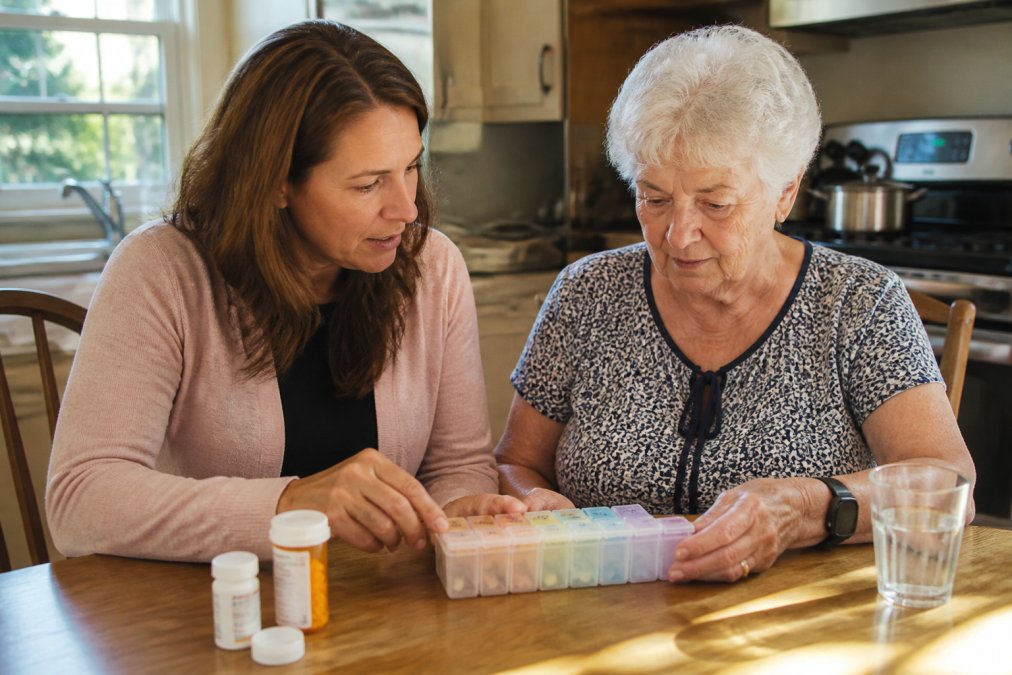
Medication adherence is one of the most dangerous areas where aging adults struggle. Many older adults manage multiple prescriptions with different dosing schedules, and errors can be serious.
Watch for: pill bottles consistently full or empty ahead of schedule, unfilled prescriptions, confusion about what each medication is for, side effects suggesting incorrect dosing, or medications stored improperly. Medication errors are a major contributor to hospital readmissions among older adults.
Social Withdrawal and Mood Changes
Social isolation is both a warning sign and an accelerant. An elderly parent who withdraws from friends, stops attending community events, or loses interest in hobbies may be experiencing depression, cognitive decline, or mobility loss.
Mood fluctuations also matter: increased irritability, anxiety, crying without clear cause, or expressions of hopelessness are not inevitable parts of aging. Early intervention through family visits, community programs, or in-home companionship makes a measurable difference.
Financial Mismanagement and Unpaid Bills
Financial mismanagement often leaves a paper trail: stacks of unopened mail, overdue utility notices, or calls from creditors. More subtle signs include duplicate purchases, confusion about whether bills have been paid, unusual charitable donations, or susceptibility to scams. Financial mismanagement often reflects cognitive decline before a formal diagnosis exists.
Unexplained Weight Loss and Nutritional Decline
Nutritional deficiency in older adults is more common than expected. An aging parent who has lost significant weight without a clear medical explanation may be skipping meals, struggling to cook, or experiencing appetite changes linked to depression or medication.
Look for: visible weight loss, a refrigerator with expired or minimal food, complaints of not being hungry, or evidence of eating the same simple foods repeatedly. Unexplained weight loss warrants a conversation with their physician.
Normal Aging vs. Signs That Require Intervention
Normal aging is not the same as functional decline. This distinction matters because conflating the two leads families either to panic unnecessarily or to dismiss real warning signs as inevitable.
Normal aging includes: occasional forgetfulness (forgetting a name, then remembering it later), slower reaction times, reduced stamina, some joint stiffness, and mild hearing or vision changes.
Signs that require intervention include: forgetting entire events, getting lost in familiar places, inability to manage medications independently, falling, stopping self-care, and withdrawing from all social contact.
The key question is not "has something changed?" but "is this change affecting their ability to live safely and independently?" When the answer is yes, it's time to act.
| Warning Sign | Normal Aging | Requires Intervention |
|---|---|---|
| Memory | Occasionally forgets names | Forgets recent events repeatedly |
| Hygiene | Slightly slower routine | Stops bathing or changing clothes |
| Mobility | Moves more slowly | Falls, shuffles, avoids stairs |
| Finances | Occasional math error | Unpaid bills, scam vulnerability |
| Nutrition | Smaller appetite | Unexplained weight loss, empty fridge |
| Mood | Occasional low days | Persistent withdrawal or depression |
Activities of Daily Living Assessment: What to Evaluate
An activities of daily living assessment evaluates whether an older adult can safely perform the basic tasks of daily life. It covers two categories: basic ADLs and instrumental activities of daily living.
Basic ADLs include: bathing and personal hygiene, dressing and grooming, eating, mobility and transferring, and continence.
Instrumental ADLs include: managing medications, preparing meals, managing finances, driving or using transportation, housekeeping, and using the phone or technology.
Schedule Your FREE Consultation →
A formal geriatric assessment, conducted by a physician or licensed social worker, provides the most comprehensive picture. According to the National Institute on Aging's resources on older adult care, tracking changes in an older adult's ability to perform these tasks over time is one of the most reliable ways to identify when professional support is needed.
Digital Safety and Scams: A Warning Sign Families Often Miss
Most guides on elderly parent needs help focus on physical and cognitive decline. Digital safety gets overlooked, yet older adults are disproportionately targeted by phone scams, email phishing, and fraudulent schemes. Increased vulnerability to scams often reflects cognitive changes before they're visible elsewhere.
Watch for: unusual charges on bank or credit card statements, calls or emails from unfamiliar companies, gift cards purchased for unclear reasons, secretiveness about financial activity, or new "friends" formed entirely online.
How to Talk to Aging Parents About Needing Help
The conversation about elderly parent needs help is the one most families dread. Fear of damaging the relationship, triggering defensiveness, or taking away a parent's sense of control keeps many adult children waiting far too long.

Lead with observation, not conclusion. Instead of "I think you need help," try "I've noticed the mail has been piling up and I'm worried about you." The first invites defensiveness; the second opens a conversation.
A practical framework:
- Choose the right moment. Not during a crisis, not when either of you is tired or stressed.
- Use "I" statements. "I've been worried" lands differently than "You've been struggling."
- Focus on one concern at a time. Listing every problem feels like an attack.
- Ask what they want. "What would make you feel safer at home?" gives them agency.
- Involve their physician. A doctor's recommendation carries weight that family concern sometimes doesn't.
- Be patient. This is rarely a one-conversation resolution.
The goal is not to win an argument. It's to open a door.
Cultural Nuances in Caregiving Conversations
Cultural background shapes how families approach caregiving in ways generic advice rarely acknowledges. In many cultures, placing a parent in any form of outside care carries significant stigma. Frame care as support, not replacement. In-home care keeps a parent in their own home, surrounded by family. Involve respected family members or community elders in the conversation when appropriate, and acknowledge the value of family caregiving before discussing its limits.
In Home Care vs Assisted Living: Choosing the Right Path
In-home care keeps an aging parent in their own home with professional support, ranging from a few hours weekly to around-the-clock care. It preserves independence and allows care to be scaled as needs change.
Assisted living provides a residential setting with on-site staff, meals, activities, and varying levels of medical support. It suits older adults needing more consistent supervision or who would benefit from daily social engagement.
The right choice depends on: the level of care required, the older adult's preference for their home, family capacity to supplement professional care, safety of the current home environment, and cost and insurance coverage. According to Medicare's guidance on home health and long-term care options, Medicare covers some home health services when specific eligibility criteria are met, but coverage for personal care and companionship typically falls outside Medicare's scope.
Many families find in-home care is the right starting point, it allows gradual transition, preserves autonomy, and can be adjusted as needs evolve.
Caregiver Burnout: An Early Warning Sign You Cannot Ignore
Caregiver burnout is rarely discussed in articles about elderly parent needs help. It should be. Adult children managing their parent's care while working full-time are often the last to recognize their own decline.
Signs include: persistent exhaustion that sleep doesn't fix, resentment toward the parent (followed by guilt), withdrawal from friendships and activities, difficulty concentrating at work, and physical health problems being ignored. Burnout is not a personal failure. It is the predictable outcome of an unsustainable situation.
Families who manage long-term caregiving most successfully build a support structure early, before crisis. A burned-out caregiver cannot provide good care. Recognizing your own limits protects both you and your parent.
Next Steps When You Recognize the Signs an Elderly Parent Needs Help
Recognizing that an elderly parent needs help is the first step. Here is a practical sequence:
- Document what you're observing. Write down specific incidents with dates.
- Schedule a physician visit. A geriatric assessment can identify underlying causes and rule out treatable conditions.
- Conduct a home safety walkthrough. Look at the home through the lens of fall risk and emergency preparedness.
- Have the conversation. Use the framework above. Start with one concern.
- Research care options. Understand the difference between in-home care, adult day programs, and assisted living before needing to decide under pressure.
- Assess your own capacity. Be honest about how much you can sustain without burning out.
- Contact a care provider for an assessment. Many in-home care agencies offer no-obligation consultations.
The Eldercare Locator, a service of the U.S. Administration on Aging connects families with local services, resources, and support programs for older adults across the country.
The hardest part is usually not finding the right care. It's giving yourself permission to ask for help on your parent's behalf, and on your own.
Watching a parent age and struggle is one of the most difficult experiences a family navigates. The signs are often gradual, the conversations are hard, and the decisions carry real weight. Loyal Care LLC exists to help families through exactly this transition, with personalized in-home care plans, one-on-one caregiver relationships built on trust, and support that ranges from a few hours a week to around-the-clock care. Schedule your free consultation with Loyal Care LLC and take the first step toward a plan that keeps your parent safe, comfortable, and home.
Frequently Asked Questions
Q: What should I do if my elderly parent refuses help?
A: Start by acknowledging their desire for independence rather than arguing about safety. Frame the conversation around specific concerns you have observed, such as missed medications or difficulty with meals, rather than a general claim that they cannot manage. Involving their primary care physician can help, since a recommendation from a trusted doctor often carries more weight than one from a family member. A geriatric assessment can also provide objective findings that make the conversation easier for everyone.
Q: At what age do most seniors typically need help with daily activities?
A: There is no single age. Functional decline depends on chronic health conditions, genetics, and lifestyle. Many older adults manage activities of daily living independently well into their eighties, while others need support earlier due to conditions like dementia, heart disease, or mobility issues. Rather than watching for a specific birthday, watch for functional changes: difficulty bathing, missed medications, unexplained weight loss, or repeated falls. Those behavioral and physical signs matter far more than age alone.
Q: How can I tell the difference between normal aging and a sign that my parent needs intervention?
A: Normal aging includes slower reaction times, occasional forgetfulness such as misplacing keys, and needing more time to complete tasks. Signs that warrant intervention are different in character: forgetting entire conversations, getting lost on familiar routes, leaving the stove on repeatedly, or showing significant changes in personal hygiene. When changes are sudden, progressive, or affect safety, that is the threshold where a home safety assessment and a conversation with their doctor become necessary.
Q: What are the first steps to take once I notice my parent needs help?
A: Schedule an appointment with their primary care physician to rule out treatable causes such as medication side effects, urinary tract infections, or depression. Complete an informal activities of daily living assessment to identify which tasks they struggle with most. Then research your care options, including in-home care and assisted living, so you can match the level of support to their actual needs. Contacting a home care agency for a free consultation is a low-pressure way to understand what professional support would look like before making any commitment.
This article was written using GrandRanker
Frequently Asked Questions
Q: What should I do if my elderly parent refuses help?
A: Start by acknowledging their desire for independence rather than arguing about safety. Frame the conversation around specific concerns you have observed, such as missed medications or difficulty with meals, rather than a general claim that they cannot manage. Involving their primary care physician can help, since a recommendation from a trusted doctor often carries more weight than one from a family member. A geriatric assessment can also provide objective findings that make the conversation easier for everyone.
Q: At what age do most seniors typically need help with daily activities?
A: There is no single age. Functional decline depends on chronic health conditions, genetics, and lifestyle. Many older adults manage activities of daily living independently well into their eighties, while others need support earlier due to conditions like dementia, heart disease, or mobility issues. Rather than watching for a specific birthday, watch for functional changes: difficulty bathing, missed medications, unexplained weight loss, or repeated falls. Those behavioral and physical signs matter far more than age alone.
Q: How can I tell the difference between normal aging and a sign that my parent needs intervention?
A: Normal aging includes slower reaction times, occasional forgetfulness such as misplacing keys, and needing more time to complete tasks. Signs that warrant intervention are different in character: forgetting entire conversations, getting lost on familiar routes, leaving the stove on repeatedly, or showing significant changes in personal hygiene. When changes are sudden, progressive, or affect safety, that is the threshold where a home safety assessment and a conversation with their doctor become necessary.
Q: What are the first steps to take once I notice my parent needs help?
A: Schedule an appointment with their primary care physician to rule out treatable causes such as medication side effects, urinary tract infections, or depression. Complete an informal activities of daily living assessment to identify which tasks they struggle with most. Then research your care options, including in-home care and assisted living, so you can match the level of support to their actual needs. Contacting a home care agency for a free consultation is a low-pressure way to understand what professional support would look like before making any commitment.